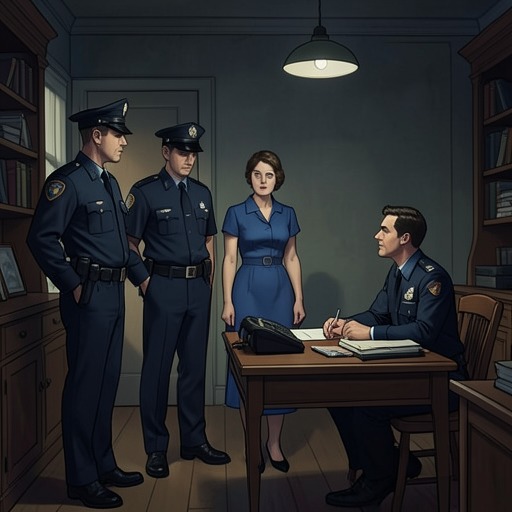
Ab Lofthus’s death and its staging as a suicide
The SonAb Lofthus’s death was not a suicide, but a murder concealed by a coerced suicide note. The truth emerges years later through Johannes Halden’s confession to Sonny Lofthus, overturning the account that had left Sonny and his mother with the belief that Ab had betrayed the police and taken his own life. The staging protected Hugo Nestor’s organization from exposure while making Ab appear responsible for the corruption he had tried to confront.
The False Account
After Ab’s death, Sonny and his mother found him dead and read a note claiming that Ab had been the police mole who helped drug dealers and traffickers. According to the note, he had warned criminals about raids and passed on information about evidence and suspects. The account made Ab seem to have participated in the very criminal activity that later shaped Sonny’s understanding of his father and his own past.
The alleged suicide was a deliberate misrepresentation, not an account supported by what actually happened. When Detective Inspector Henrik Westad later discusses Sonny as a suspect in a murder investigation, he notes that Sonny has changed his statement and now claims an alibi. That investigative exchange belongs to the later plot, but it echoes the larger instability surrounding testimony and evidence: people’s statements change, witnesses become important, and the apparently settled story of a crime may conceal what happened before it.
What Johannes Reveals
Johannes had been Ab’s confidential informant. He tells Sonny that Ab suspected a mole in the police rather than serving as one himself. Johannes had overheard Nestor speak by telephone to his boss about the need to get rid of a policeman called Lofthus before he could ruin their operation. Johannes passed this warning to Ab, who understood that the threat extended beyond himself: other police officers were already compromised.
Ab chose not to involve more people. He believed that the danger inside the police made a broader response unsafe, and he decided to face the threat alone. Before doing so, he made Johannes swear to keep the warning secret. Johannes kept that promise for years, even though silence left Sonny with the false version of his father’s death. His confession is therefore both a disclosure of the murder and a belated breach of the oath Ab had asked him to keep.
Johannes finally tells Sonny directly that Ab did not shoot himself. Sonny sits in darkness while Johannes speaks, and the silence leaves uncertain how much Sonny has understood. For Johannes, however, the act of telling matters: he has delivered the message to the person it belongs to. The delayed confession changes the meaning of the old note, replacing its accusation against Ab with an account of his attempt to resist a compromised police force.
The Murder and Its Staging
Ab was alone that weekend because Sonny and his mother were away at a wrestling competition. Knowing Nestor’s men were coming, Ab barricaded himself inside the family’s yellow house in Berg. The detail makes the house a site of both resistance and isolation: Ab anticipated the attack, but his decision to keep others out left him to confront it without help.
Nestor and his men still managed to enter. They did not want the consequences that would follow from openly shooting a police officer, so they forced Ab to write a suicide note. In exchange, they promised to spare Sonny and his mother. After Ab had written the note, they shot him with his own gun. The staged suicide thus served two connected purposes: it concealed the killers’ responsibility and made Ab’s death appear to confirm the note’s accusation against him.
The bargain also explains the particular shape of the cover-up. The note did not merely provide a false cause of death; it transferred suspicion onto Ab and preserved the impression that the criminal network had been aided from within the police by the dead officer himself. The threat to his family was part of the mechanism that produced this false record, while the promise to spare them made the deception inseparable from Ab’s final attempt to protect them.
The Secret in the Diary
The truth is reinforced by Ab’s diary, which Sonny eventually finds and which Markus reads. The diary is not a complete daily record: entries can be separated by months and sometimes consist of only a date and a few sentences. Its fragments place the family’s pressures alongside Ab’s personal history, including the breakup of the troika, Helene’s pregnancy, the purchase of a house, the strain of living on a policeman’s salary, and the bank’s increase in interest rates that made the mortgage difficult to pay.
That record gives the suicide story a second point of contrast. The note presents Ab as a corrupt officer, while the diary preserves a more partial, ordinary record of family, work, and financial strain. Neither the diary’s fragmentary form nor its existence alone explains every circumstance of the murder; its importance is that it supplies a surviving trace from Ab that can be read against the account imposed on his death. Together with Johannes’s testimony, it helps expose the gap between the official-looking story and the concealed event.
The disclosure reaches Sonny through distinct forms of evidence: a coerced note written at the moment of the murder, a confidential informant’s long-suppressed spoken account, and a diary hidden in the family home. Each carries a different relation to truth and risk. The note was produced under threat and designed to mislead; Johannes’s confession breaks a promise and exposes what he witnessed; the diary survives as an incomplete record whose meaning becomes newly legible after the false explanation has been challenged.
Consequences and Significance
The cover-up shaped Sonny’s understanding of his father long after the murder. The note made Ab appear to have betrayed the police and helped drug dealers and traffickers; Johannes’s confession instead revealed that Ab had suspected the police mole and had tried to confront a danger reaching into the force itself. The difference is not merely between two explanations of a death: the false account assigns guilt to the victim, while the delayed testimony restores the risk he took and the choice he made to keep others out of danger.
The story also makes the murder’s truth depend on testimony that arrives under pressure and at a cost. Johannes had been Ab’s confidential informant, yet he remained silent for years because he had sworn to keep the warning secret. When he finally speaks to Sonny, his confession breaks that promise and gives the buried message to its intended recipient. Sonny’s silence leaves Johannes unsure how much has been understood, but the act of disclosure ends Johannes’s long concealment.
Ab’s diary adds a written trace against the note’s imposed account. Its scattered entries record fragments of family life and financial strain rather than a continuous explanation of the crime; read beside Johannes’s account, they complicate the image created by the coerced confession without independently settling every detail. The event’s decisive reversal therefore comes through the collision of different records: a note designed to deceive, a witness who speaks late, and a diary whose fragments acquire new meaning once the supposed suicide is exposed as murder.
Consequences and Significance
The cover-up shaped Sonny’s understanding of his father long after the murder. The note made Ab appear to have betrayed the police and helped drug dealers and traffickers; Johannes’s confession instead revealed that Ab had suspected the police mole and had tried to confront a danger reaching into the force itself. The difference is not merely between two explanations of a death: the false account assigns guilt to the victim, while the delayed testimony restores the risk he took and the choice he made to keep others out of danger.
The truth depends on testimony that arrives under pressure and at a cost. Johannes had been Ab’s confidential informant, yet he remained silent for years because he had sworn to keep the warning secret. When he finally speaks to Sonny, his confession breaks that promise and delivers the buried message to its intended recipient. Sonny’s silence leaves Johannes unsure how much has been understood, but the act of disclosure ends Johannes’s long concealment.
Ab’s diary adds a written trace against the note’s imposed account. Its scattered entries record family life and financial strain rather than a continuous explanation of the crime; read beside Johannes’s account, they complicate the image created by the coerced confession without independently settling every detail. The reversal emerges through the collision of records: a note designed to deceive, a witness who speaks late, and a diary whose fragments acquire new meaning once the supposed suicide is exposed as murder.
Consequences and Significance
The cover-up shaped Sonny’s understanding of his father long after the murder. The note made Ab appear to have betrayed the police and helped drug dealers and traffickers; Johannes’s confession instead revealed that Ab had suspected the police mole and tried to confront a danger reaching into the force itself. The difference is more than two explanations of a death: the false account assigns guilt to the victim, while the delayed testimony restores the risk Ab took and his choice to keep others out of danger.
The truth depends on testimony that arrives late and at a cost. Johannes had been Ab’s confidential informant, yet remained silent for years because he had sworn to keep the warning secret. When he finally speaks to Sonny, he breaks that promise and delivers the buried message to its intended recipient. Sonny’s silence leaves Johannes unsure how much has been understood, but telling him ends Johannes’s long concealment.
Ab’s diary provides a written trace against the note’s imposed account. Its scattered entries record fragments of family life and financial strain rather than a continuous explanation of the crime; read beside Johannes’s testimony, they complicate the image created by the coerced confession without independently settling every detail. The reversal emerges through the collision of records: a note designed to deceive, a witness who speaks late, and a diary whose fragments acquire new meaning once the supposed suicide is exposed as murder.